English
  简体中文
简体中文  日本語
日本語 Planning your first trip to Thailand? You’re about to experience one of the most exciting countries in Southeast Asia. Busy city streets, peaceful mountain towns, and beautiful island beaches are just the start
Mar 5, 2026
Guide to the Types of Boxing Pads in Muay Thai
Key takeaway / Summary of topic answer
- Boxing pads bridge the gap between bag work and real fighting by developing timing, accuracy, footwork, defense, and realistic combinations.
- Each type of boxing pad—Thai pads, focus mitts, kick shields, belly pads, micro mitts, and training tools—serves a specific training purpose.
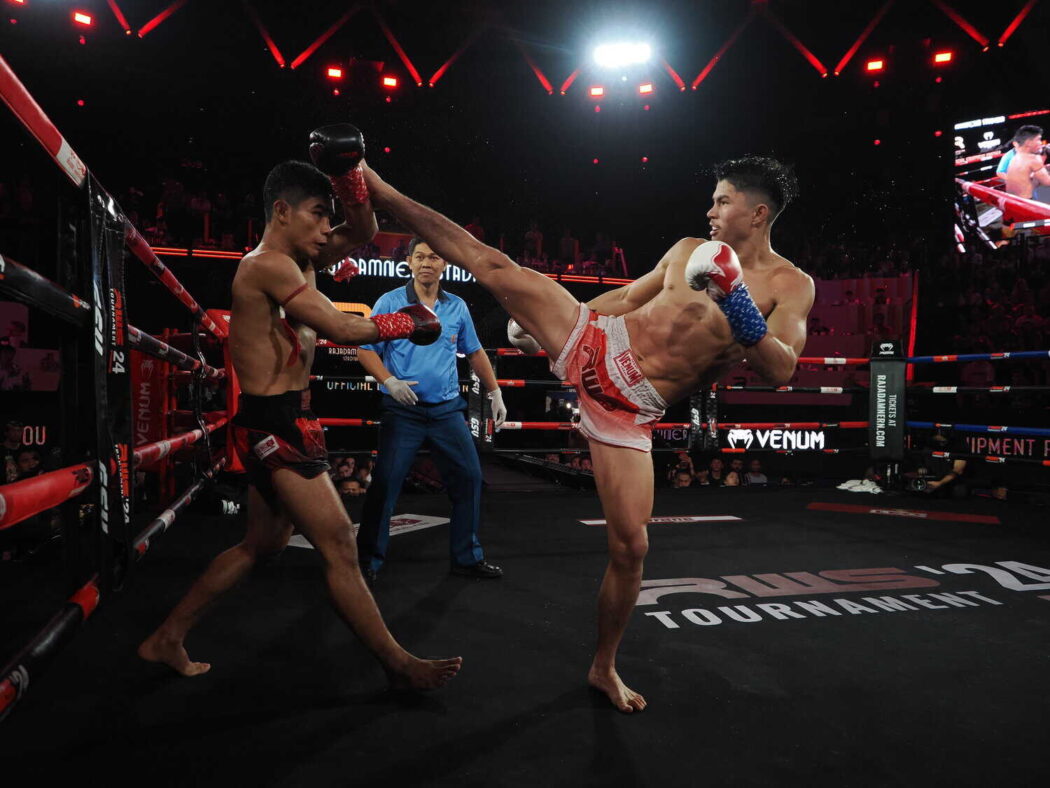
- Proper pad use, proper pad holding, and targeted pad selection directly improve fight performance, as seen in elite fighters at Rajadamnern Stadium.
Table of Content
The Purpose of Boxing Pads in Muay Thai
Different Types of Boxing Pads
- Thai Pads
- Focus Mitts
- Kick Shields
- Belly Pads
- Micro Mitts
- Conditioning Sticks and Target Tools
How to Use Boxing Pads Properly
How to Hold Pads Properly
Matching Pad Types to Training Goals
Watch Pad Skills Translate to Fight Performance at Rajadamnern Stadium
Taking Care of Your Boxing Pads
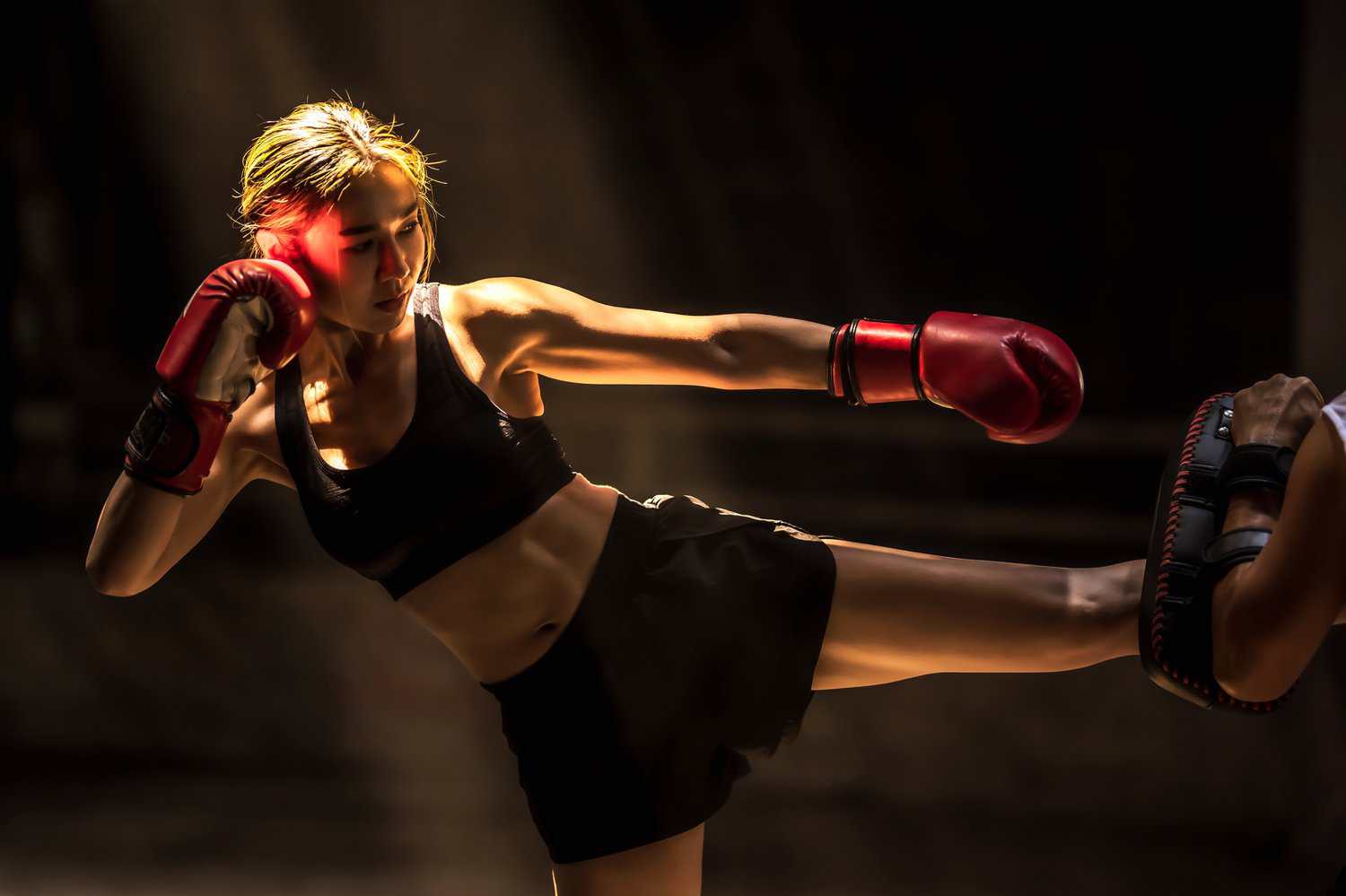
Pad work is the backbone of Muay Thai training. While heavy bags build power and conditioning, pads teach you how to fight. A skilled holder moves like an opponent, feeds realistic angles, and forces you to think while you strike. In that sense, good pad work shapes timing, accuracy, balance, and fight IQ in ways solo training simply cannot replicate.
Once you understand the different types of boxing pads and how to use them, the next step is watching elite fighters put those skills to work. Live fights at Rajadamnern Stadium are a live masterclass in how pad-trained techniques translate to real combat prowess.
The Purpose of Boxing Pads in Muay Thai
Pads serve as the critical link between bag work and live opponents. They allow fighters to train combinations at realistic distances and angles, build conditioning safely, and learn defense, counters, and footwork in motion.
The pad holder – often a coach or training partner – acts as a live partner rather than a passive target like a heavy bag. A good holder presents openings, applies pressure, and creates scenarios that prepare fighters for in-ring exchanges. This dynamic interaction separates pad work from every other form of training.
Different Types of Boxing Pads
Thai Pads
Thai pads are thick, curved pads strapped to the forearms. They handle the full Muay Thai attack arsenal: kicks, knees, elbows, and heavy punches. Both fighter and holder enjoy conditioning benefits, and these pads work for all experience levels when paired with a competent holder.
Focus Mitts
Focus mitts are smaller, hand-held pads designed for speed and precision work. They excel at training punches, elbows, head movement, and counters. Unlike Western boxing, Muay Thai uses focus mitts for short-range strikes such as elbows alongside standard boxing combinations. These types of boxing pads are not built for full-power body kicks or heavy knees, however.
Kick Shields
Kick shields are large, thick pads held against the body or thigh. They absorb powerful round kicks, teeps, and push-power strikes. These shields are excellent for drilling low kick repetition and building leg conditioning without hurting the holder (or the kicker).
Belly Pads
Belly pads wrap around the coach’s midsection, protecting against body shots, knees, and close-range combinations. They pair naturally with types of boxing pads like Thai pads or mitts for realistic combo flow—punch, kick, knee sequences that mirror actual fight exchanges.
Micro Mitts
Micro mitts are very small pads for advanced timing and accuracy work. Experienced fighters use them to fine-tune precision, angles, and defensive reactions. The minimal target size forces fights into consistently clean techniques.
Conditioning Sticks and Target Tools
These are not pads in the traditional sense, but trainers sometimes use them for timing drills, parries, and touch-contact work. Use them only under guidance and with controlled force.
How to Use Boxing Pads Properly
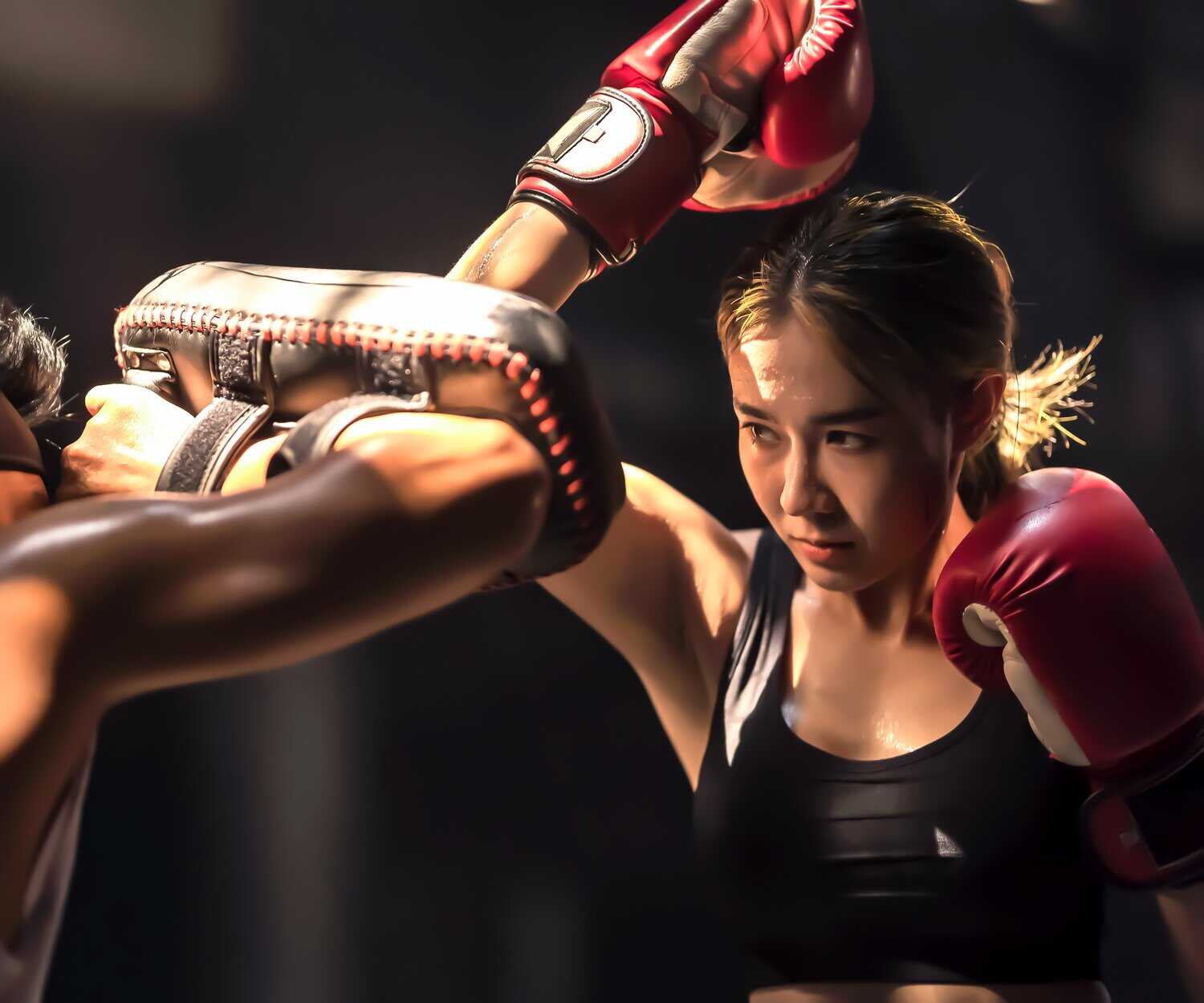
Your coach or trainer will give you hands-on demonstrations on how to use each of the different types of boxing pads, but in general, meet the pad – do not chase it blindly. Step, pivot, and strike from your stance rather than lunging out of position. Focus on the correct distance, turning your hip fully on kicks, and returning your guard after every strike.
Pad work is a great time to focus on breathing and following a rhythm as well. Exhale with each shot and listen to your holder’s cues. Good pad rounds also incorporate defense: checking kicks, slipping punches, blocking, and countering. Treat every round of training as a fight simulation, not just target practice.
How to Hold Pads Properly
Holding the pads goes far beyond just wearing them, and a skilled holder can make an impactful difference in a fighter’s training. The fundamentals include maintaining a solid stance and bracing before impact, presenting clear targets at logical heights and angles, and moving like an opponent by stepping in, stepping out, and adding light pressure. Avoid common mistakes like dropping pads on impact, swinging targets wildly, or overloading beginners with chaotic combinations.
Matching Pad Types to Training Goals
For power development, use Thai pads and kick shields. For speed and accuracy, focus mitts and micro mitts work best. Clinch and knee work calls for belly pads combined with Thai pads. Fight-specific preparation uses mixed pad setups that simulate real bout pace and tactics.
Taking Care of Your Boxing Pads
Because sweat degrades leather and foam over time, wipe down pads after every session and dry them out of direct sunlight. Check straps, stitching, and padding regularly, and retire broken pads or ones that become too soft, warped, or uneven. Damaged pads teach bad mechanics and increase injury risk.
Watch Pad Skills Translate to Fight Performance at Rajadamnern Stadium
At Rajadamnern Stadium, you see how the timing, balance, and combinations practiced at the gym appear in real exchanges. Watch how fighters recover stance, pivot, and set angles, as these are the exact skills that quality pad rounds build.
Pay attention to low kicks, body kicks, and counters. Link them back to specific pad drills you have practiced. Notice the rhythm and pacing: elite fighters do not throw every strike at full power, just like smart pad work emphasizes timing over brute force.
For students who want to study technique closely, ringside seating offers the clearest view of footwork, angles, and strike placement. Understanding the types of boxing pads and using them correctly speeds up progress in the gym and keeps training safer, and learning from watching professional action up close complements that training perfectly.
After training smartly in the gym by using each of the different types of boxing pads, visit Rajadamnern Stadium and see elite fighters live and up close. Book your tickets today to Thailand’s best Muay Thai boxing spectacle, every night of the week.
References:
Focus Mitts vs. Thai Pads vs. Kick Pads: Choose The Right One. (2024, September 11). Tussle. Retrieved December 11, 2025, from https://www.tusslegear.com/blogs/guide/focus-mitts-vs-thai-pads-vs-kick-pads
Boxing Mitts, Thai Pads, and Shields: The Best in Partner Training Tools. (2019, July 23). Ringside Boxing Blog. Retrieved December 11, 2025, from https://blog.ringside.com/boxing-mitts-thai-pads/
FAQ
Q1: Why are boxing pads so important in Muay Thai training?
A: They simulate a live opponent, helping you practice timing, accuracy, defensive reactions, and combinations in a dynamic environment.Q2: What pad type should beginners start with?
A: Thai pads are the most versatile and beginner-friendly because they handle punches, kicks, knees, and elbows safely.Q3: Can focus mitts be used for full-power kicks?
A: No. Focus mitts are designed for speed and precision, not heavy kicks or knees.Q4: How do I know if I’m using pads correctly?
A: You should strike from a stable stance, meet the pad rather than chase it, maintain guard, and follow your holder’s cues and rhythm.Q5: What makes a good pad holder?
A: A good holder presents clean targets, maintains strong bracing, moves like an opponent, and structures combinations logically.Q6: Which pads build power the fastest?
A: Thai pads and kick shields are best for developing power safely and effectively.Q7: How do I extend the lifespan of my pads?
A: Wipe them down after each use, let them dry completely, avoid direct sunlight, and inspect straps and padding regularly.Q8: How does watching fights help improve pad work skills?
A: Observing elite fighters at Rajadamnern Stadium shows how pad-trained timing, balance, and combinations translate directly into real exchanges.
Share this news



Related News

Day Trips From Bangkok – Top 6 Tours and Activities
Mar 5, 2026
Planning your first trip to Thailand? You’re about to experience one of the most exciting countries in Southeast Asia. Busy city streets, peaceful mountain towns, and beautiful island beaches are just the start