
 English
  简体中文
简体中文  日本語
日本語  English
  简体中文
简体中文  日本語
日本語 Everyone should learn a bit of background about Muay Thai before joining their friends and having an immersive Muay Thai Experience at Rajadamnern Stadium. Knowing what you’re watching will enrich the experience for all and give you and your friends something to discuss and a way to evaluate the action in the ring. We’ll offer […]
Oct 27, 2025
Explore Traditional Muay Thai Boxing

Everyone should learn a bit of background about Muay Thai before joining their friends and having an immersive Muay Thai Experience at Rajadamnern Stadium. Knowing what you’re watching will enrich the experience for all and give you and your friends something to discuss and a way to evaluate the action in the ring.
We’ll offer a glimpse into the background of Muay Thai so you can fully understand and appreciate the dedication and commitment of those long ago who created and defined the sport, and the continued perseverance required to master this form of martial arts today.
History of Muay Thai
Muay Thai traditions were born hundreds of years ago on the battlefields of what is now Thailand. The techniques created emphasized the total commitment of mind, body, and soul that should be engaged when using this new style of warfare, which would eventually be known as Muay Thai.
Muay Thai became popular as a sport during the 16 and 1700s. The Royal Family were skilled practitioners of Muay Thai and often fought in village contests as incognito competitors. They firmly believed in the sport and frequently kept the army fit and in shape when the country was at peace by having the soldiers train and compete in Muay Thai. It was through these competitions that the sport of Muay Thai spread around the country.
When you visit Rajadamnern Stadium to see live Muay Thai action, be sure to watch the Wai Kru dance, performed before a Muay Thai bout. It reminds competitors that Muay Thai is as much about embodying the virtues of humility, discipline, and honor as it is about defeating an opponent.
Muay Thai: The Art of 8 Limbs
The Muay Thai fighting style has been adopted by fighters all over the world. They come to Thailand to learn the techniques of Muay Thai because it offers more versatility, options, and strategies. Muay Thai is called the “Art of 8 Limbs”, as the weapons consist of the following:
1 Fists
Fists are effective mid-range weapons used to throw a variety of punches. They are often used as decoys to set up devastating kicks, but they can also be highly effective on their own.
2 Elbows
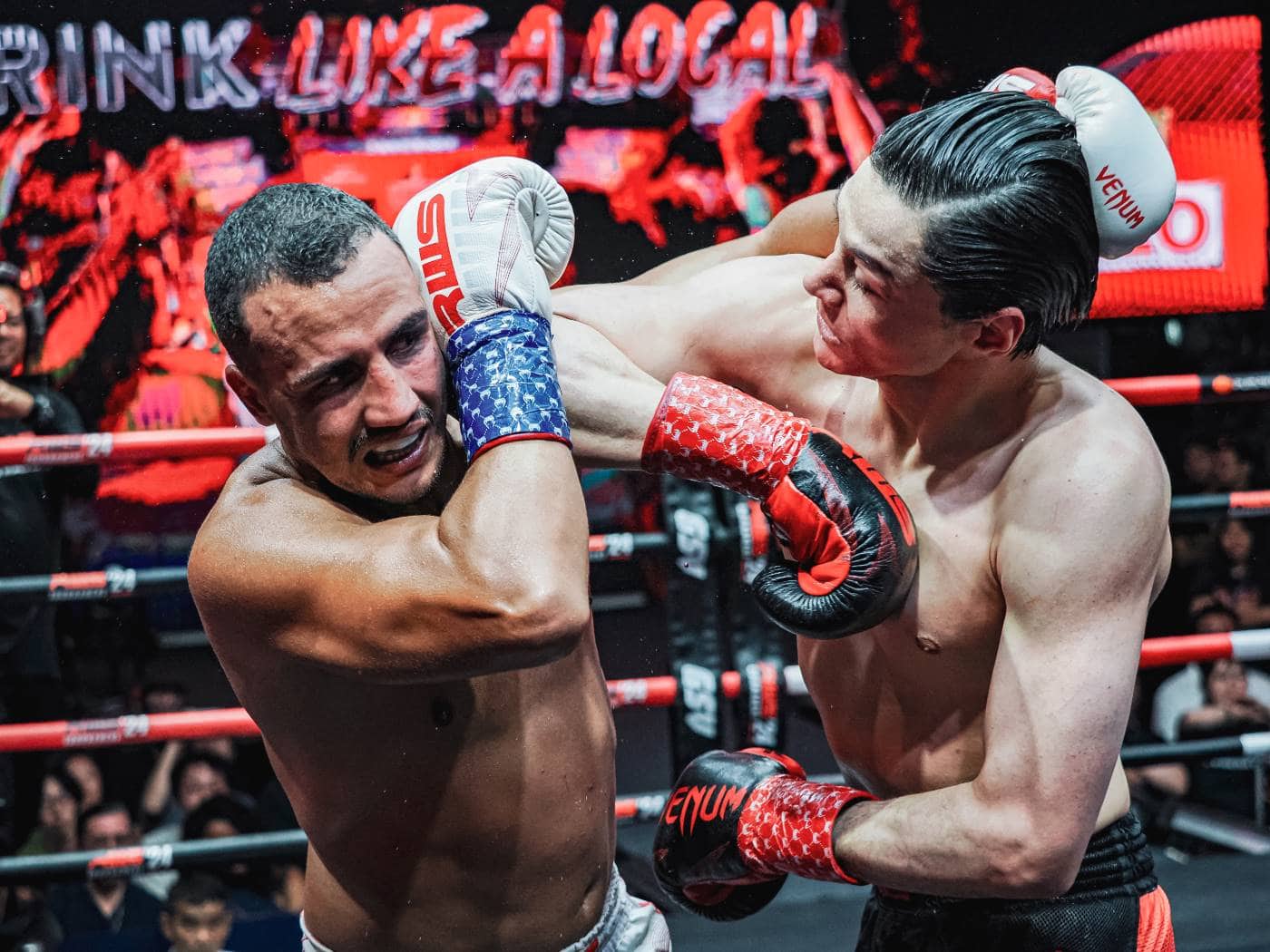
The elbow is the most distinctive and iconic weapon in Muay Thai. They’re used in other recognized martial art styles, but not to the degree of effectiveness demonstrated in Muay Thai. They are highly effective weapons in close-range combat and clinches.
3 Knees
The knees represent formidable weapons in Muay Thai. They are the reason most experienced Muay Thai boxers have a low stance and avoid ducking as much as possible. The knees are responsible for many knockout victories.
4 Feet
While the fists, elbows, and knees are often the most robust aspects of Muay Thai, the kicks are easily the most effective. The Muay Thai roundhouse kick is regarded as the most potent and most damaging kick in martial arts. When the kick is delivered correctly, the power comes from twisting the hips to use the boxer’s entire weight. Many fighters from other MMA disciplines travel to Thailand to learn to use the 8 weapons of Muay Thai.
Fundamental Punching Mechanics
Muay Thai has four punches: jabs, hooks, crosses, and uppercuts. You must have good technique, footwork, and timing to throw a proper punch in Muay Thai. Boxers start with a basic stance, keeping their elbows close to the body to generate power while protecting the ribcage. They twist their hips and shoulders into the punch to increase the power, and then quickly retract the punch to defend themselves from counter-punches.
Footwork and Postures
Footwork is used to initiate movement and add power in Muay Thai. Efficient footwork also helps the boxer maintain balance, create angles for attacking, control the distance, or dodge a counterattack from their opponent.
Footwork contains several patterns of steps that offer different angles to attack and defend in Muay Thai, including the hop, pivot, and shuffle steps. The hop step involves simply moving forward or backwards quickly to change your position, often as a defensive measure. In the pivot step, the boxer turns on the ball of their feet to swiftly create different angles for attacking or defending. The shuffle step involves shuffling the lead foot, followed quickly by the back foot, to advance and retreat.
Muay Thai uses the same basic “boxer’s stance” as many other fighting styles. The stance positions the feet shoulder-width apart, with the weight evenly distributed and the knees slightly bent. The hands are held up to protect the face, and the arms are kept close to the ribcage.
Effective Broken Attacking Rhythm of Muay Thai
Muay Thai is famous for its broken attacking rhythm. In many standard boxing matches, the fighters settle into a predictable punching rhythm as they tire. In Muay Thai, the broken rhythm is seen as more unpredictable and effective. The broken rhythm method can throw off the timing and defense of your opponent and open them up to an effective attack.
Limited Head Movement of Muay Thai
Although boxing is known for its emphasis on head movement, Muay Thai competitors don’t use head movement as often. This is because, with so many weapons used in Muay Thai, protecting the body takes precedence over protecting the head.
Muay Thai fighters have developed other evasive tactics. You may notice Muay Thai fighters angling their trunk away from an attack, sliding backwards out of the reach of an attack, or dipping the front shoulder and stepping forward to bypass an attack. It’s more important to guard your entire body and be able to continue attacking than protecting only the head.
Plan an Evening at Rajadamnern Stadium
Once you’ve familiarized yourself with the weapons and tactics of Muay Thai, you should plan an evening of experiencing all the action and excitement of live Muay Thai with friends at Rajadamnern Stadium. You’ll see firsthand why Muay Thai appeals to competitive sports fans worldwide.
Simply take the BTS Skytrain to the Ratchathewi or Victory Monument Station, and then it’s just a short taxi ride to the stadium. If the MRT is closer to your home, take it to the Sam Yot Station, then grab a taxi to the stadium. Rajadamnern Stadium is located in the Banglamphu section of Bangkok. Plan an immersive Muay Thai experience with your friends at Rajadamnern Stadium.
References:
The Role of Muay Thai in Thai Culture – Retrieved on 6/19/25 from – https://www.nowmuaythai.com/blog/the-role-of-muay-thai-in-thai-culture
History of Muay Thai – Retrieved on 6/19/25 from – https://muaythai.sport/history-of-muaythai/
Top 10 Muay Thai Beginner Tips – Retrieved on 6/19/25 from – https://www.muaythaicitizen.com/top-10-tips-for-muay-thai-beginners/
Basic Techniques of Muay Thai – Retrieved on 6/19/25 from: https://www.nowmuaythai.com/blog/basic-techniques-of-muay-thai
Startle Your Muay Thai Opponent! – Retrieved on 6/19/25 from: https://nwfighting.com/change-rhythm-surprise-opponents/
Share this news


Related News

Thailand Sports Guide – What Locals Love to Watch
Oct 27, 2025
If there’s one thing you can count on in Thailand (aside from the incredible food), it’s that sports are a big deal here

Thai Boxing Match Dress Code & More: Muay Thai Etiquette for Spectators
Oct 27, 2025
Rajadamnern Stadium, the home of Muay Thai, is a sports arena that doubles as a living museum, where eight decades of Muay Thai heritage is celebrated every night. While the energy of a Muay Thai fight is electric and certainly fascinating to watch, learning stadium etiquette enables spectators to fully appreciate what’s happening and allows […]
