English
  简体中文
简体中文  日本語
日本語 From Muay Thai to Takraw, Thailand’s traditional sports carry centuries of history. Explore games that shaped Thai culture and where to see them live.
Apr 27, 2026
The Thai Traditional Sports That Have Defined a Nation
Key Takeaways
- Thailand’s traditional sports in Thailand include Muay Thai, Takraw, Muay Boran, long-boat racing, and cock fighting — each tied to history, ceremony, and community life.
- Muay Thai, known as the “Art of Eight Limbs,” is Thailand’s national martial art and a cornerstone of Thai sports culture, with roots tracing back to battlefield combat techniques.
- Rajadamnern Stadium, opened in 1945, is one of Thailand’s oldest and most iconic Muay Thai venues and remains the cultural benchmark for authentic competition today.
- Takraw and Muay Boran are still practiced in communities and cultural settings across Thailand, keeping ancient traditions alive.
Thailand is known for football and golf, but these sports aren’t historically from there. More ancient, intricate, and revealing of Thai culture are the sports native to Thailand. Thai traditional sports were not invented for entertainment alone. They grew out of warfare, agriculture, ceremony, and community, and many of them are still practiced today in much the same spirit they always were.
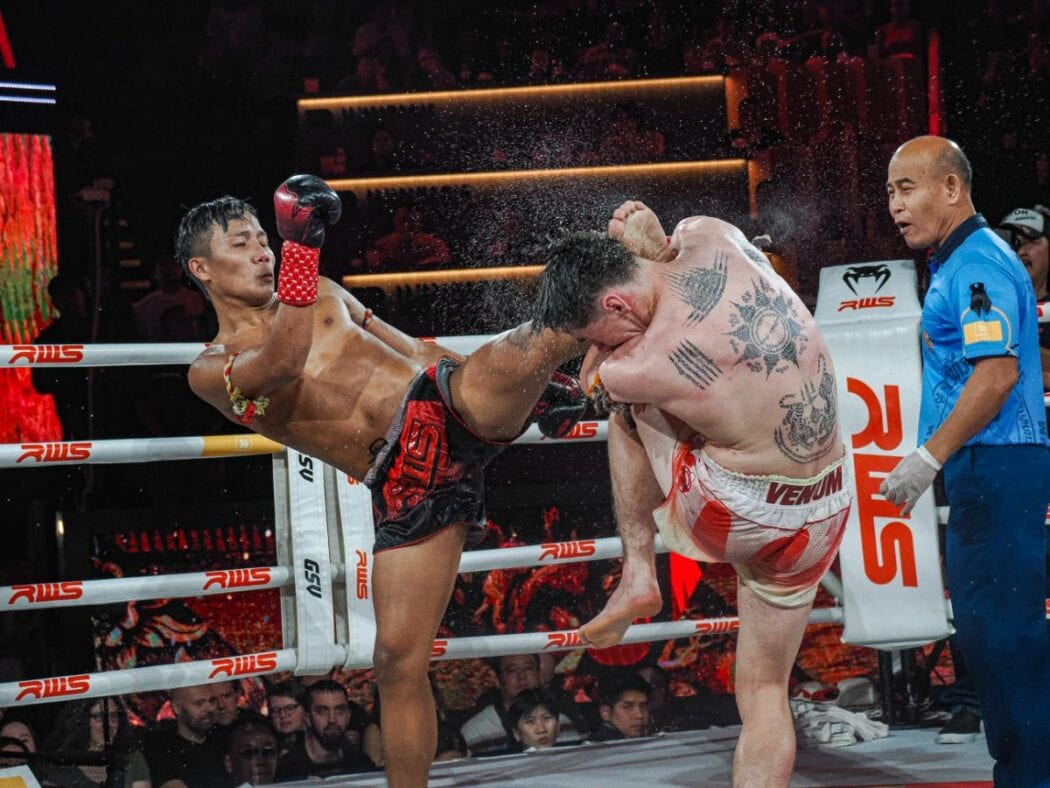
Muay Thai is Thailand’s national martial art
Muay Thai originated as a close-quarters combat method for Thai soldiers facing situations where weapons were unavailable on the battlefield, rather than as a sport. The methods were effective and strict, evolving over centuries from military training into a formal discipline, then a national sport, and ultimately a globally popular striking art.
Its nickname, the “Art of Eight Limbs,” comes from the eight points of contact a fighter can use: fists, elbows, knees, and shins. That breadth gives the sport a tactical range that boxing and kickboxing cannot match. Before every bout, fighters perform the Wai Kru, a ritual that honors their teachers, their gym lineage, and the art itself. A live orchestra plays Sarama music throughout the fight, with the tempo rising as the action intensifies. These are not performative touches. They are the bones of Thai sports culture, present at every legitimate fight night.
Rajadamnern Stadium sits at the center of that tradition. Opened in 1945, it is one of the oldest Muay Thai venues in Thailand and the sport’s enduring cultural benchmark. Champions built their reputations here. The stadium continues to host professional bouts under authentic Thai rules, with live Sarama music, the Wai Kru ceremony, an immersive dome experience, live betting culture, and the world’s first Muay Thai championship belt on display. Among fun activities in Bangkok, a fight night at Rajadamnern Stadium belongs in a category of its own.
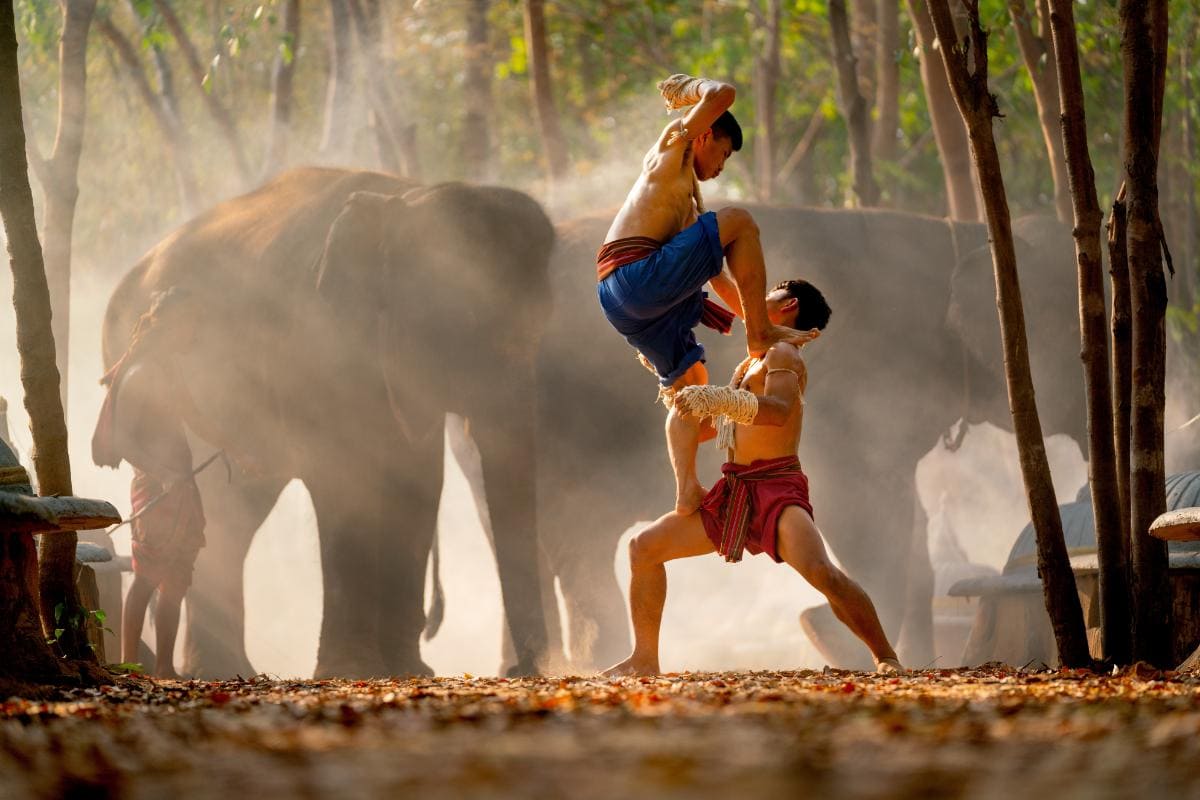
Muay Boran (The Ancestor Of Muay Thai)
Muay Boran means “ancient boxing,” and that is exactly what it is. Before Muay Thai was formalized with ring rules, weight classes, and gloves, there was Muay Boran, the unarmed combat system from which modern Muay Thai developed. It was built for real fighting situations rather than sport, and as a result it includes techniques, locks, and movements that the modern sport no longer permits.
Muay Boran is no longer practiced as a competitive discipline, but it has not disappeared. It lives on through cultural demonstrations at festivals, historical events, and martial arts gatherings. For anyone interested in where Muay Thai came from and what it looked like before structure was imposed on it, Muay Boran is the most direct answer available.
Takraw (The Rattan Ball Sport)
Takraw is built around a single constraint: keep a woven rattan ball airborne without using your hands. In the traditional circle format, players stand in a ring and work together to sustain the ball in the air, using their feet, knees, chest, and head. There is no scoring, no opposing team, and no winner. The goal is collective skill and the longer the ball stays up, the better.
A formalized competitive version of the sport, Sepak Takraw, introduced a net and a points-based structure, and has become well-established across Southeast Asia. The circle game, however, remains the more culturally rooted form. It is still a common sight in parks, school grounds, and community spaces throughout Thailand, particularly in rural areas where it has been played the same way for generations. It is one of the most accessible of all traditional sports in Thailand, requiring no court and no equipment beyond the ball itself.
Boat racing (Peng Rua)
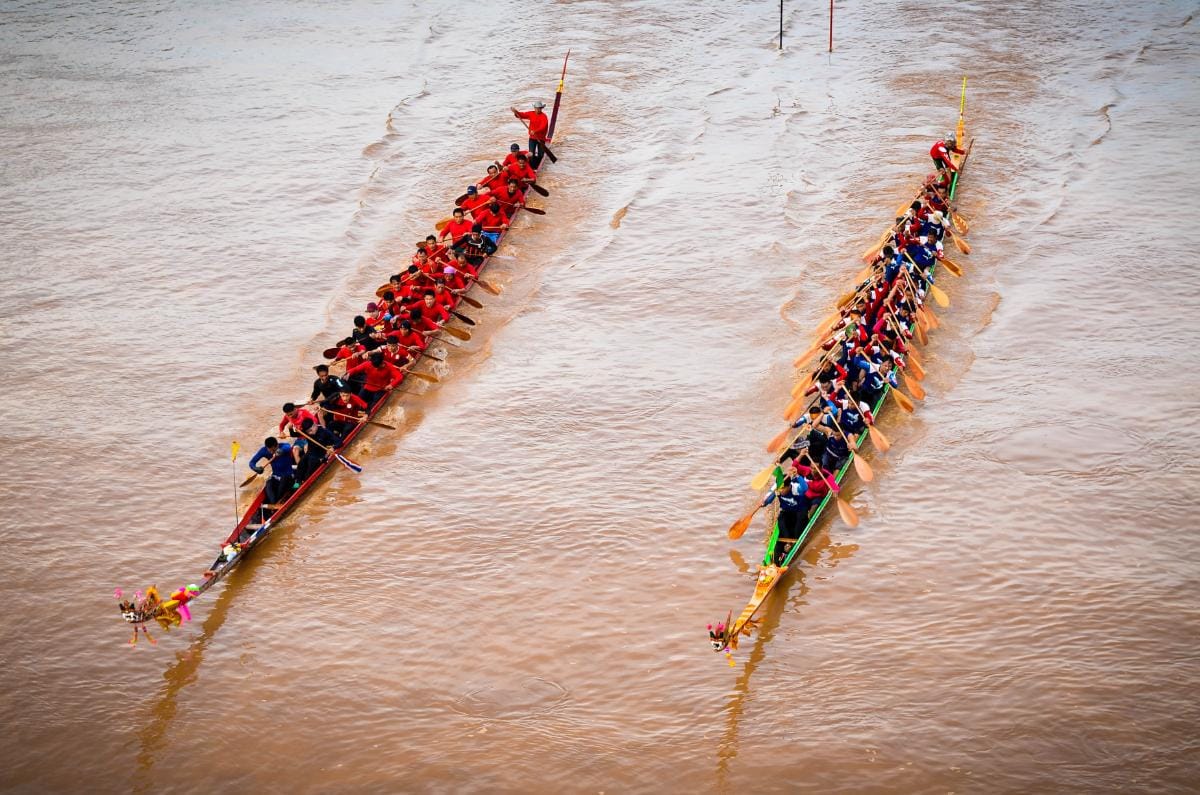
Long-boat racing has been a part of Thai life for centuries. The races, known as Peng Rua, are held along rivers and are most commonly associated with the period following the end of Buddhist Lent. Teams of paddlers, sometimes numbering in the dozens, compete in long, narrow boats that are often decorated with elaborate carvings and painted in the colors of the temple or district they represent.
The events are as much community occasions as they are sporting competitions. Winning brings genuine pride to a village or district. The gatherings also serve as occasions for charitable merit-making and cultural celebration. Notable races take place in Nan and Phichit provinces, as well as along Bangkok’s Chao Phraya River, where the events draw large crowds each year.
Cock fighting (Kai Chon)
Kai Chon is among the oldest traditional pastimes in Thailand, with roots that run deep into rural community life. Historically, bouts took place during agricultural off-seasons and local festivals, serving as a form of communal entertainment with social and, in some contexts, ceremonial significance. It was part of how communities marked time and gathered together outside of working life.
Today, Kai Chon is regulated and confined to designated areas. It remains active in certain parts of the country, particularly in northern and northeastern Thailand, where it is observed within established legal frameworks as part of the region’s traditional cultural practices.
Thailand’s traditional sports are still very much alive
None of the sports covered here are museum pieces. Muay Thai fills stadiums every week. Takraw is played in parks across the country. Muay Boran is performed at cultural events. Boat races draw whole communities to the riverbanks each year. Kai Chon persists in the regions where it has always been practiced. Each one carries something forward from Thai history that formal preservation alone cannot achieve.
For visitors looking for Bangkok family activities that go deeper than the standard tourist circuit, watching live Muay Thai is the most immediate entry point into Thai sports culture. Rajadamnern Stadium, one of the sport’s most storied venues, hosts professional bouts that bring everything covered in this article into focus in a single, memorable evening in Bangkok.
Frequently Asked Questions About Thai Traditional Sports
Q: What are the main traditional sports in Thailand?
A: The most recognized traditional sports in Thailand are Muay Thai, Takraw, Muay Boran, Peng Rua (long-boat racing), and Kai Chon (cock fighting). Each has its own historical roots and continues to play a role in Thai cultural life today.
Q: What is Thai sports culture known for?
A: Thai sports culture is known for its strong ties to ceremony, national identity, and community tradition. Muay Thai is the most internationally recognized example, blending martial discipline with ritual practices such as the Wai Kru and live Sarama music. Sport in Thailand has historically been bound to cultural and communal life rather than existing separately from it.
Q: What is Muay Boran and how does it differ from Muay Thai?
A: Muay Boran is the ancient unarmed combat system from which modern Muay Thai developed. Unlike Muay Thai, it was not designed for sport competition, which makes it less structured and broader in its techniques. It is no longer practiced competitively but is preserved today through cultural demonstrations and performances.
Q: Is watching Muay Thai suitable as a Bangkok family activity?
A: Yes. A live Muay Thai bout is one of the most culturally engaging experiences available in Bangkok for visitors of all ages. Rajadamnern Stadium, established in 1945, provides the full experience: traditional music, the Wai Kru ritual, elite-level competition, and an immersive historical presentation through its dome experience.
Q: Where is the best place to watch Muay Thai in Bangkok?
A: Rajadamnern Stadium is widely regarded as the most historic and culturally authentic Muay Thai venue in Bangkok. Opened in 1945, it hosts professional bouts under traditional Thai rules, with live Sarama music and the full Wai Kru ceremony, making it the standard against which other venues are measured.
References
- Muay Thai History and Cultural Significance. Retrieved 18 March, 2026 from https://www.tourismthailand.org
- Sepak Takraw. Retrieved 18 March, 2026 from https://ocasia.org
Share this news



Related News
Is Thailand Safe to Travel to in 2026? Tips for Your Trip
Apr 27, 2026
Thailand is one of Southeast Asia’s safer destinations in 2026. Get essential Thailand travel safety tips and see Muay Thai live at Rajadamnern Stadium.