English
  简体中文
简体中文  日本語
日本語 A practical guide to building Muay Thai abs: principles, drills, recovery, and where to study real fight-ready forms at Rajadamnern Stadium.
Mar 12, 2026
A Core Workout Guide to Getting Muay Thai Abs
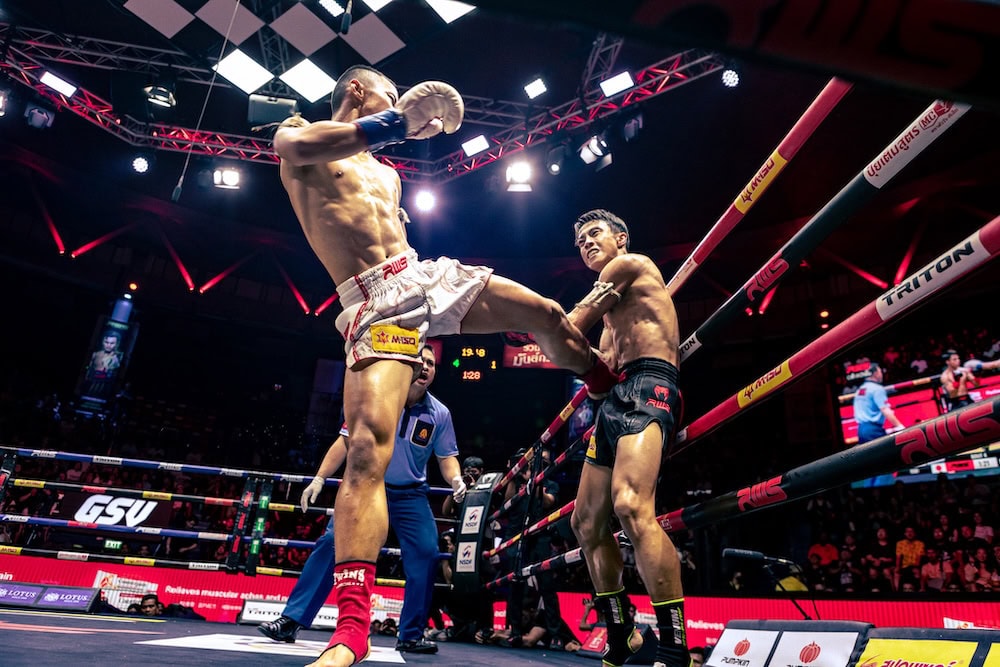
Muay Thai fighters train diligently to develop a strong midsection that can withstand kicks, knees, and clinch pressure. Muay Thai abs are built for impact, stability, and endurance. They keep you upright when a kick lands, transfer force when you throw, and help you finish rounds with clean technique. To see what that looks like in real time, add a night of Muay Thai culture to your training calendar and watch elite athletes in action.
Muay Thai Core Exercises
Bracing & Anti-Rotation
Hard-style Plank (RKC plank): Forearms on floor, elbows under shoulders. Squeeze the glutes, press the toes into the ground, and pull the elbows toward your toes without moving. You should feel full-body tension, not just abs.
Dead Bug: Lie on your back, arms up, knees over hips. Keep your lower ribs down as you slowly extend the opposite arm and leg. Exhale at full reach; return without arching your back.
Pallof Press (band/cable): Stand side-on to a cable or band. Press the handle straight out from your chest and resist the band’s pull. Don’t twist; fight the rotation by bracing.
Side Plank with Top-Leg Raise: Elbow under shoulder, body in a straight line. Lift the top leg a few inches while keeping hips stacked. This builds lateral stability for clinch frames.
Rotation & Power
Medicine-Ball Rotational Throw (wall): Step, pivot the rear foot, rotate hips, and drive the ball into the wall. Catch softly and reset to train the same hip-to-shoulder snap as round kicks and hooks.
Russian Twist (feet down): Sit tall with a slight lean, ribs down. Rotate the torso just enough to feel obliques; avoid over-twisting the lower back.
Banded Hip-Turn Drill: Loop a band around your waist/hips. Snap the hips as if throwing a round kick; return to neutral. This teaches quick hip rotation without losing balance.
Landmine Rotations: Hold a barbell in a landmine. Shift weight, pivot, and guide the bar in an arc from hip to hip. Keep the core tight and shoulders down.
Flexion (Front-Line Strength)
Hanging Knee Raise / Toes-to-Bar: Hang from a bar with a quiet swing. Posteriorly tilt the pelvis and lift knees or feet. Lower slowly.
Reverse Crunch (bench or floor): Knees together, feet off the ground. Curl the pelvis toward the ribs first, then lower vertebra by vertebra. Don’t yank with hip flexors.
Ab-Wheel Rollout (knees): Kneel with the wheel under your shoulders. Roll out until you feel a strong brace, then pull back with lats and midline; no sagging at the lower back.
Extension & Anti-Flexion (Back Line)
Back Extensions (45° bench): Neutral neck and spine. Hinge down with control, then drive up until the body is straight; don’t hyperextend.
Hip-Hinge Iso-Hold and Band Row: Hinge at hips, soft knees, flat back. Hold the hinge while rowing a band to the ribs. Builds anti-flexion strength for clinch posture.
Bird Dog (3-1-1 tempo): Hands under shoulders, knees under hips. Extend opposite arm/leg long; pause, then return. Keep hips level and ribs in.
Lateral Flexion & Carries
Suitcase/Farmer Carry: Pick up a dumbbell or kettlebell; walk tall. Don’t lean toward or away from the weight. Anti-tilt strength that transfers to clinch control.
Side Bend (light DB/cable): Stand tall, slide the weight down one thigh, then pull back to center with the opposite oblique. Small, clean range, no jerking.
Copenhagen Plank: Inside leg on a bench (knee or foot), body straight, elbow under shoulder. Lift hips and hold. Hits adductors and obliques for powerful posts in the clinch.
Impact Conditioning (Advanced, Coach-Led)
Partner Med-Ball Body Bumps: Stand with your body braced; your partner gives light taps with a soft med ball to your abs/obliques.
Pad-Tap Drills Between Rounds: The coach delivers gentle taps to the trunk while you maintain a strong brace. Teaches timed exhales and tension on cue.
Breathing Braces: Hands on ribs. Inhale through the nose, then a sharp “tss” exhale as you lock the midline. Builds reflexive bracing for body shots.
“Hidden” Core From Muay Thai
Round-Kick Clusters (bag): Focus on driving from the floor, snapping the hip, and re-stacking posture on the step-down. Control the return; don’t collapse.
Teeps on the Bag: Extend through the standing leg, brace the midline, and post-kick balance for 2–3 seconds to train the lower abs and hip control.
Knee Chains (clinch): Frame, pull the partner, drive the knee, and re-brace tall. This involves continuous work that challenges the trunk under fatigue.
Shadowboxing with Tempo: Flow light, then add 3–4 “power shots” per minute with sharp exhales and crisp stops. This teaches you to brace and relax on command.
Sample 12–15 Minute Core Finisher (How to Use These)
Pallof Press — 3×10/side
Hanging Knee Raise — 3×8
Side Plank — 2×30s/side
Med-Ball Rotational Throw — 3×6/side
Suitcase Carry — 2×30 m/side
Rest 30–40 seconds between moves. Keep ribs down, breathe on effort, and stop before form breaks.
Coaching Cues to Lock In Technique
- Ribs down, pelvis neutral: No flared ribs or low-back arch.
- Exhale on effort: Take a short, sharp breath to tighten the brace.
- Own the negative: Slow lowers build real control.
- One clean rep in reserve: Stop before form slips.
Core Principles of a Muay Thai Abs Workout
Train in Layers
Instead of endless crunches, cover the main functions that matter in the ring:
- Anti-rotation: Resist being twisted in the clinch or by an opponent cutting angles (e.g., Pallof press holds).
- Rotation: Create whip for round kicks and hooks (e.g., medicine-ball rotational throws).
- Flexion and extension: Control rib-to-hip distance without collapsing under fatigue (e.g., hard-style sit-ups; hip hinge work).
- Bracing: Stiffen the trunk on impact and during heavy exchanges (e.g., loaded carries, dead bug variations).
Use Fight Patterns
Build your Muay Thai abs workout around movements you’ll actually use:
- Kicks and knees: Hip drive and trunk rotation.
- Teeps: Lower-abs control and balance.
- Clinch pummeling: Anti-rotation and isometric holds.
Balance Strength and Conditioning
Add time-efficient core blocks 3–5 times per week, 8–15 focused minutes each, rather than marathon sessions that kill recovery.
A Smart Approach to Recovery
- Prioritize quality over quantity: feel the brace, control the breath.
- Rotate emphasis (anti-rotation one day, rotation the next).
- Sleep 7.5–9 hours, hydrate, and do 10–12 minutes of light mobility after evening sessions.
Why a Strong Core Matters in Muay Thai
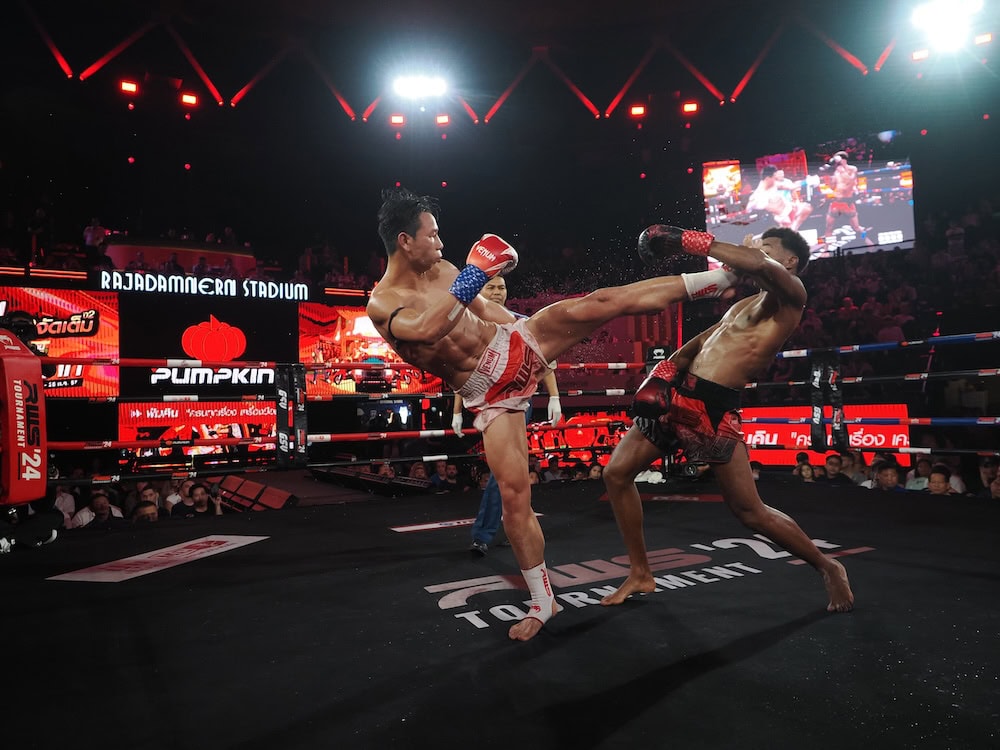
A trained core is your power hub, shock absorber, and stabilizer all in one. Here’s what a strong core does for you:
Transfers power into every strike: Better rib-to-hip connection means cleaner hip rotation for kicks, knees, and hooks.
Keeps you balanced under fire: You recover posture faster after throwing a round kick, checking a low kick, or absorbing a body shot.
Improves clinch control: Strong bracing lets you frame, turn, and off-balance opponents without folding through the midline.
Protects against body shots: Trained bracing and breathing reduce the “fold” response to teeps, kicks, and knees to the ribs.
Boosts late-round endurance: An efficient trunk helps delay fatigue, allowing your technique to stay tidy in rounds 4–5.
Sharpens footwork and defense: Stable hips and ribs enable smoother pivots, angle cuts, and exits, helping you avoid reaching or over-swinging.
Supports back health: A resilient trunk helps unload the lower back during intense pad work, heavy bag sessions, and lifts.
Enhances breathing under pressure: Diaphragm control and timed exhales on impact keep your breathing steady during high-tempo exchanges.
Raises accuracy and consistency: When your midline stays stacked, shots land on target more often, especially counters off the ropes.
Why Tie Your Training to a Night at Rajadamnern Stadium
The best way to recognize the benefits of a trained core is to watch professionals use it under pressure. Watching a fight night can reframe your Muay Thai workout as you observe how elite fighters brace on contact, breathe under pressure, and regain posture after kicks. Watch the sport’s best at the venue that shaped modern Muay Thai and put these principles to work on your next training. Book a ticket for a fight night at Rajadamnern Stadium for the full immersive experience.
References:
Effective Core Exercises For Muay Thai To Improve Power And Stability. Retrieved on 4 December 2025 from https://evolve-mma.com/blog/effective-core-exercises-for-muay-thai-to-improve-power-and-stability/
Reasons Why Muay Thai Is a Great Core Workout? Retrieved on 4 December 2025 from https://muaythaibattleconquer.com/muay-thai-great-core-workout/
Share this news



Related News
What Is Muay Chaiya and Where to Watch it Live
Mar 12, 2026
Muay Chaiya is a defensive variation of Thai martial arts – watch fighters use this style live at Rajadamnern Stadium.