English
  简体中文
简体中文  日本語
日本語 Discover Thailand’s famous places beyond Bangkok, from ancient temples and stunning mountains to marine parks and incredible islands
Mar 12, 2026
Thailand Landmarks: Must-Visit Famous Places
Key Highlights
- Thailand’s landmarks span every region, from ancient capitals and Khmer ruins to rainforests, waterfalls, and island marine parks.
- Northern mountains, Isan plains, central historic cities, eastern islands, and southern beaches each offer distinct cultural and natural highlights.
- Ending a trip in Bangkok with a Muay Thai fight at Rajadamnern Stadium completes the experience of Thailand’s history, culture, and traditions.
Table of Contents
- Northern Thailand
- Northeastern Thailand (Isan)
- Central and Western Thailand
- Eastern Seaboard
- Southern Thailand
- Rajadamnern Stadium: Thailand’s Landmark for Muay Thai
Thailand offers far more than the glitz and glamor of its capital city, Bangkok. Ancient capitals, rainforest peaks, marine parks, and living cultural traditions stretch across every region of the country. Whether you explore the northern mountains, the northeastern plains, the western countryside, or the southern islands, you will find incredible Thailand landmarks that reward the journey all along the way.
Bangkok is typically the start and end point of trips to Thailand, so here are a few famous places in Thailand that you can visit during your trip
Northern Thailand
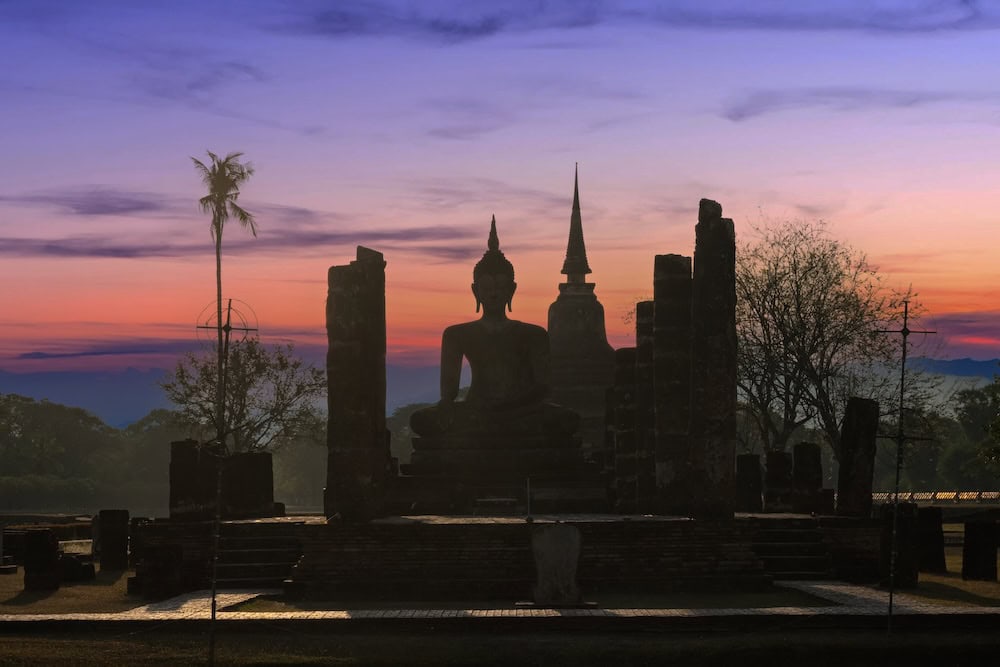
- Sukhothai Historical Park (Sukhothai) – This UNESCO World Heritage Site preserves the ruins of Siam’s first capital, dating to the 13th century. Wat Mahathat and Wat Si Chum feature iconic Buddha statues surrounded by lotus-filled moats. Rent a bicycle and explore nearly 200 ruins across the sprawling grounds.
- Wat Phra That Doi Suthep (Chiang Mai) – Perched in the mountains above Chiang Mai, this golden temple offers panoramic views and centuries of Buddhist history. The 306-step staircase, flanked by serpent balustrades, leads to one of northern Thailand’s most revered shrines.
- Doi Inthanon National Park (Chiang Mai) – Thailand’s highest peak reaches 2,565 meters. Cloud forests, waterfalls, and twin chedis honoring the King and Queen make this a must-visit for nature lovers.
- Wat Rong Khun (Chiang Rai) – The “White Temple” is a contemporary masterpiece blending traditional Buddhist architecture with surreal modern art. It is unique and iconic, and its mirror-embedded exterior glitters in the sunlight.
Northeastern Thailand (Isan)
- Phanom Rung Historical Park (Buriram) – One of Thailand’s most impressive Khmer monuments, this Hindu temple complex sits atop an extinct volcano. Built between the 10th and 13th centuries, the pink sandstone sanctuary and processional walkway rival sites in Cambodia.
- Phimai Historical Park (Nakhon Ratchasima) – Another stunning Khmer ruin, Phimai predates Angkor Wat and features intricate stone carvings within a peaceful town setting.
- Wat Phu Tok (Bueng Kan) – Wooden walkways climb seven levels up a sandstone outcrop, each level representing a stage of Buddhist enlightenment. The views across Isan are worth the ascent.
- Phu Kradueng National Park (Loei) – A challenging hike leads to a high plateau with pine forests, waterfalls, and cool-season temperatures rare in Thailand. One of the more rewarding and accessible hikes in Thailand.
Central and Western Thailand
- Ayutthaya Historical Park (Ayutthaya) – The ruins of Siam’s second capital include Wat Mahathat, famous for its Buddha head entwined in tree roots. A short trip from Bangkok, Ayutthaya remains one of Thailand’s famous places for history and photography.
- Lopburi Old Town & Phra Prang Sam Yot – Khmer-style ruins share the streets with hundreds of macaques. The temple’s three prangs and the town’s lively monkey population create a unique atmosphere.
- Kanchanaburi & the Bridge on the River Kwai – This province combines WWII history with natural riverfront beauty. Walk the historic bridge, visit the war cemetery, and learn about the Thailand-Burma Railway.
- Erawan National Park (Kanchanaburi) – Seven tiers of emerald waterfalls cascade through the jungle at this Thailand landmark. The lower levels offer swimming pools with fish that nibble your feet.
Eastern Seaboard
- Koh Chang (Trat) – Thailand’s second-largest island features jungle-covered mountains, quiet beaches, and waterfalls. It remains less developed than the southern islands.
- Koh Kood (Trat) – Further out than Koh Chang, Koh Kood’s crystal-clear water, white sand, and a laid-back atmosphere make this island ideal for travelers seeking peace over parties.
- Namtok Phlio National Park (Chanthaburi) – A compact park with a beautiful waterfall, historic chedi, and fish-filled pools surrounded by forest.
Southern Thailand
- Khao Sok National Park (Surat Thani) – One of the world’s oldest rainforests, over 160 million years old, gives this park major Jurassic Park vibes. Limestone karsts rise from emerald waters, and floating bungalows offer overnight stays on the lake.
- Similan Islands Marine National Park (Phang Nga) – Famous in Thailand for world-class diving and snorkeling among granite boulders and vibrant coral. The islands open seasonally from October to May.
- Railay Beach (Krabi) – Accessible only by boat, Railay’s towering limestone cliffs attract rock climbers and beach lovers alike. Phra Nang Cave Beach ranks among Thailand’s most photographed stretches of sandy shore.
- Phi Phi Islands (Krabi) – Maya Bay, made famous by having appeared in film, has reopened with visitor limits after years of conservation efforts. The islands offer snorkeling, diving, and dramatic cliff scenery.
- Old Town Phuket – Sino-Portuguese shophouses, street art, and local cafes give Phuket’s historic quarter a character distinct from its beaches. A visually iconic Thai landmark.
- Ang Thong Marine Park (Koh Samui) – A cluster of 42 islands with hidden lagoons, hikeable viewpoints, and kayaking through limestone formations.
Rajadamnern Stadium: Thailand’s Landmark for Muay Thai

After exploring the vast Thailand landmarks across the regions, and before your flight out of Bangkok, watching fight night at Rajadamnern Stadium ties it all together. Since 1945, our Muay Thai stadium in Bangkok has hosted the best fighters in Thailand, both locals and foreigners, and both men and women.
Rajadamnern Muay Thai Stadium provides visitors with the full Muay Thai experience. Witness the Wai Kru ceremony, where fighters pay respect to their teachers, the live ringside orchestra setting the rhythm, and the crowd’s “oowee” chants building with each exchange. You experience discipline, music, ritual, and elite athleticism in one unforgettable setting.
When planning your Thailand adventure, reserve a night at Rajadamnern Stadium to experience Thailand’s national sport where it belongs.
Frequently Asked Questions
What are the most famous landmarks in Thailand outside Bangkok?
Sukhothai Historical Park, Ayutthaya Historical Park, Doi Inthanon National Park, Khao Sok National Park, and the Phi Phi Islands are among the most well-known landmarks across the country.
Which region of Thailand is best for history and ancient ruins?
Central Thailand and Isan are best for history, featuring Ayutthaya, Sukhothai, Phanom Rung, and Phimai, which showcase Thai and Khmer heritage.
Where can travelers find the best national parks in Thailand?
Top national parks include Doi Inthanon in the north, Phu Kradueng in Isan, Erawan National Park in Kanchanaburi, and Khao Sok in southern Thailand.
What are the best islands in Thailand for a quieter experience?
Koh Chang and Koh Kood on the Eastern Seaboard are less developed and ideal for travelers seeking a relaxed atmosphere.
Which Thailand landmarks are best for beaches and marine life?
Railay Beach, the Phi Phi Islands, the Similan Islands, and Ang Thong Marine Park are renowned for beaches, snorkeling, and diving.
Why is Rajadamnern Stadium considered a Thailand landmark?
Rajadamnern Stadium has hosted elite Muay Thai fights since 1945 and represents Thailand’s national sport, blending ritual, music, and top-level competition.
Is Muay Thai worth experiencing during a trip to Thailand?
Yes, watching Muay Thai at a historic stadium offers insight into Thai culture, tradition, and athletic discipline that cannot be experienced elsewhere.
References:
- Historic Town of Sukhothai and Associated Historic Towns. (n.d.). UNESCO World Heritage Centre. Retrieved January 7, 2026, fromhttps://whc.unesco.org/en/list/574/
- 31 Thailand Landmarks and Monuments For Your 2025 Bucket List. (2025, April 6). Travel2Next. Retrieved January 7, 2026, fromhttps://travel2next.com/thailand-landmarks-monuments/
Share this news



Related News

A Core Workout Guide to Getting Muay Thai Abs
Mar 12, 2026
A practical guide to building Muay Thai abs: principles, drills, recovery, and where to study real fight-ready forms at Rajadamnern Stadium.