English
  简体中文
简体中文  日本語
日本語 A guide to the major types of martial arts, which ones complement Muay Thai, and why you should study elite ring craft live at Rajadamnern Stadium.
Mar 12, 2026
All the Major Types of Martial Arts Fighting Styles (& Which Ones to Complement Your Muay Thai Training)
Key Takeaways
- Muay Thai is a complete striking base; smart cross-training fills gaps (hands, clinch turns, ground survival, and footwork variety).
- List of martial arts by categories: striking, grappling, hybrid/combat, weapons, and internal systems.
- Striking add-ons (Boxing, Karate, Taekwondo) sharpen hands, deception, and long-range kicking without breaking Muay Thai rhythm.
- Grappling arts (Judo, Wrestling, BJJ, Sambo) improve clinch control, balance, and situational confidence, which are valuable for MMA or general self-defense.
- Hybrid systems (MMA, Krav Maga/Combatives) enhance fight IQ and reaction speed.
- Weapons & traditional systems (Krabi-Krabong, Eskrima/Kali/Arnis, Wing Chun, Silat/Longfist) refine timing, angles, and close-range sensitivity that carry into ring craft.
- Internal systems (Taiji, Bagua, Xingyi) train for structure, breath, and efficient power, which are useful for balance, pressure, and calmer counters.
- Best complements for most Muay Thai athletes: Boxing, Judo/Wrestling, BJJ (if crossing over to MMA), Karate/Taekwondo, and Krabi-Krabong.
- Program 1 to 2 cross-sessions/week; keep Muay Thai as the spine; rotate secondary arts in 6- to 8-week blocks.
- Watch expert fighters in action at Rajadamnern Stadium to see what truly transfers from ring cutting, clinch posture, elbow timing, and kick-catch balance.
Table of Contents
- Introduction: Muay Thai Striking System
- Types of Martial Arts
- Striking Arts
- Grappling Arts
- Hybrid & Combat Sports
- Weapons Traditions
- Internal Systems
- Best Complements for Muay Thai
- See the Benchmark Live at Rajadamnern Stadium
- Frequently Asked Questions
If you train Muay Thai, you already work with one of the most complete striking systems in the world, with elbows, knees, shins, kicks, and clinches. Still, cross-training can sharpen skill gaps, build ring IQ, and keep your practice fresh.
Below is a practical guide to the types of martial arts, their core traits, and how they can complement your Muay Thai training. Use this list of martial arts as a guide to strengthen your Muay Thai practice, then watch the best fighters apply these skills live at Rajadamnern Stadium.
Types of Martial Arts
To better understand the different martial arts types, we’ll listall fighting styles by purpose and skill set:
- Striking arts: Involves hands, elbows, knees, and shins, and is focused on distance, timing, and counters.
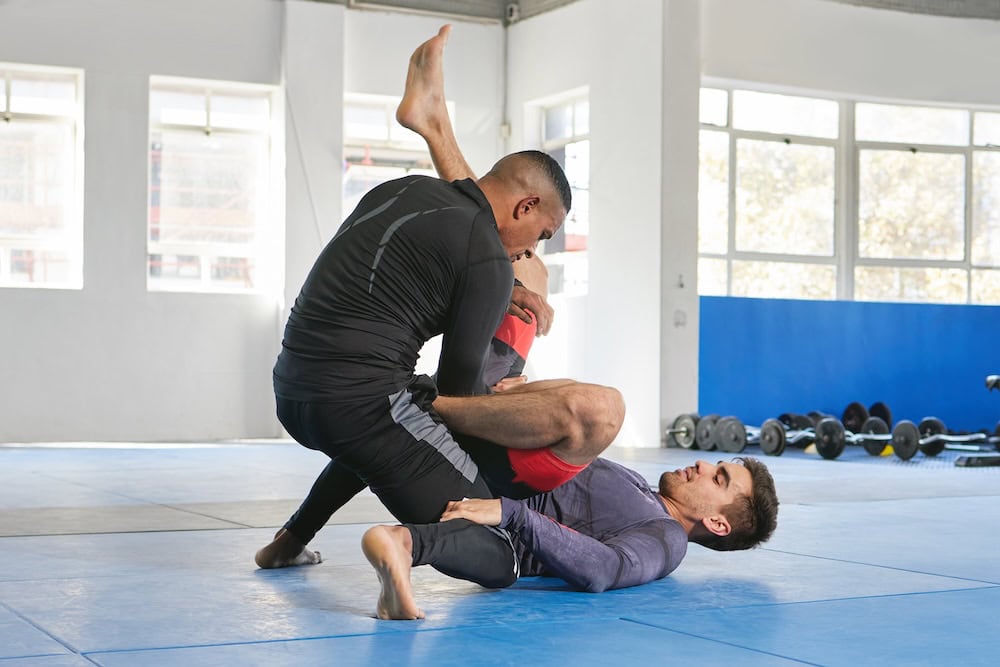
- Grappling arts: Focuses on clinches, takedowns, pins, and submissions.
- Hybrid and combat sports: Have mixed rulesets that blend striking and grappling.
- Weapons traditions: Uses blades or sticks that refine timing, angles, and footwork.
- Internal systems: Relies on structure, balance, breathing, and efficiency.
Quick tip: Be honest about your “why,” whether for sport performance, general self-defense, or cultural study. Your reasons will shape your training mix.
Striking Arts
Muay Thai
Core traits: Elbows, knees, long and low-line kicks, teeps, clinch, and scoring on visible effect.
Why it’s an excellent base for martial arts training: It covers every striking range and teaches balance under pressure.
Boxing
Core traits: Sharper hands, tighter defense, pocket exits, head movement, and counter-timing.
How it can complement your training: The stance and rhythm overlay smoothly with Muay Thai; you’ll punch cleaner without losing kick power.
Karate (Traditional/Shotokan & Kyokushin)
Core traits: Stance discipline, snap kicks, timing on entries.
How it can complement your training: Adds deceptive long-range kicks and blitz steps without losing Muay Thai mechanics.
Taekwondo
Core traits: Explosive kicking, feints, switch steps, long-range distance control.
How it can complement your training: Adds deceptive entries and fast angle changes that set up round kicks, teeps, and counter-elbows without breaking Muay Thai rhythm.
Grappling Arts
Brazilian Jiu-Jitsu
Core traits: Ground control, positional strategy, submissions.
How it can complement your training: Teaches get-ups, base, and calm under pressure, which are useful if you cross into MMA or want well-rounded self-defense.
Judo
Core traits: Throws, off-balancing (kuzushi), foot sweeps.
How it can complement your training: Upgrades your clinch turns and dumps; the sensitivity you build in grips translates to better posture control in Thai clinch.
Wrestling (Freestyle/Greco-Roman)
Core traits: Level changes, pressure, mat or ring control.
How it can complement your training: Brutally effective pummeling, underhook fighting, and wall/ring control, which is great for maintaining balance while launching knees.
Sambo
Core traits: Throws, ground control, plus leg locks (sport/combat variants).
How it can complement your training: Chain takedowns and unbalancing from over-unders; it develops hips that won’t get moved around in tight clinches.
Hybrid & Combat Systems
MMA (Mixed Martial Arts)
Core traits: Integrated striking and grappling with fence tactics.
How it can complement your training: Develop a broader fight IQ, including when to clinch and break, and how to connect kicks, punches, and scrambles.
Krav Maga/Modern Combatives
Core traits: Scenario drills, rapid neutralization, situational awareness.
How it can complement your training: While this combative training mainly focuses on self-defense and survival, it can help develop fast reactions and protective habits.
Weapons & Traditional Systems
Krabi-Krabong
Core traits: Thai weapon system using thekrabi (sword) and krabong (staff), emphasizing footwork, angles, and timing.
How it can complement your training: With a direct lineage that pairs naturally with Muay Thai tactics, it helps develop cleaner entries and exits and sharpens footwork and distance.
Eskrima, Kali & Arnis
Core traits: Stick/knife fluidity and continuity, hand-eye speed, line recognition.
How it can complement your training: Helps fighters be more attuned to rhythm changes and timing that carry into striking exchanges and footwork.
Wing Chun & Southern Chinese Styles
Core traits: Centerline control, close-range sensitivity.
How it can complement your training: Helps develop efficiency in motion with direct movements, while hand-trapping concepts can help with clinch entries (adapted for ring legality).
Silat & Northern Chinese Longfist
Core traits: Off-balancing, sweeps, broken rhythm.
How it can complement your training: Applies unusual angles, sudden movement, and foot sweeps to disrupt counters.
Internal Systems
Taiji/Tai Chi
Core traits: Structure, rooting, breath, relaxation under load.
How it can complement your training: Improves balance and calm under pressure so your counters land without wasted effort.
Baguazhang
Core traits: Circular footwork, angle changes, spiral power.
How it can complement your training: Sharpens ring cutting and evasive exits while keeping your hips loaded for kicks and knees.
Xingyi Quan
Core traits: Forward pressure, linear power, whole-body linkage.
How it can complement your training: Builds straight-line drive for teeps, body kicks, and clinch marches that don’t stall.
Best Complements for Muay Thai
- Boxing: Hands, defense, pocket exits
- Judo/Wrestling: Clinch turns, trips, anti-takedown balance
- BJJ: Ground survival for MMA crossovers or general readiness
- Karate/Taekwondo: Kick variety and long-range deception to set up Thai power
- Krabi-Krabong: Thai footwork lineage and timing that improves ring cutting
Programming tip: Add 1 to 2 cross-sessions per week and keep Muay Thai as the base. Cycle secondary arts in 6- to 8-week blocks so skills actually stick.
See the Benchmark Live at Rajadamnern Stadium
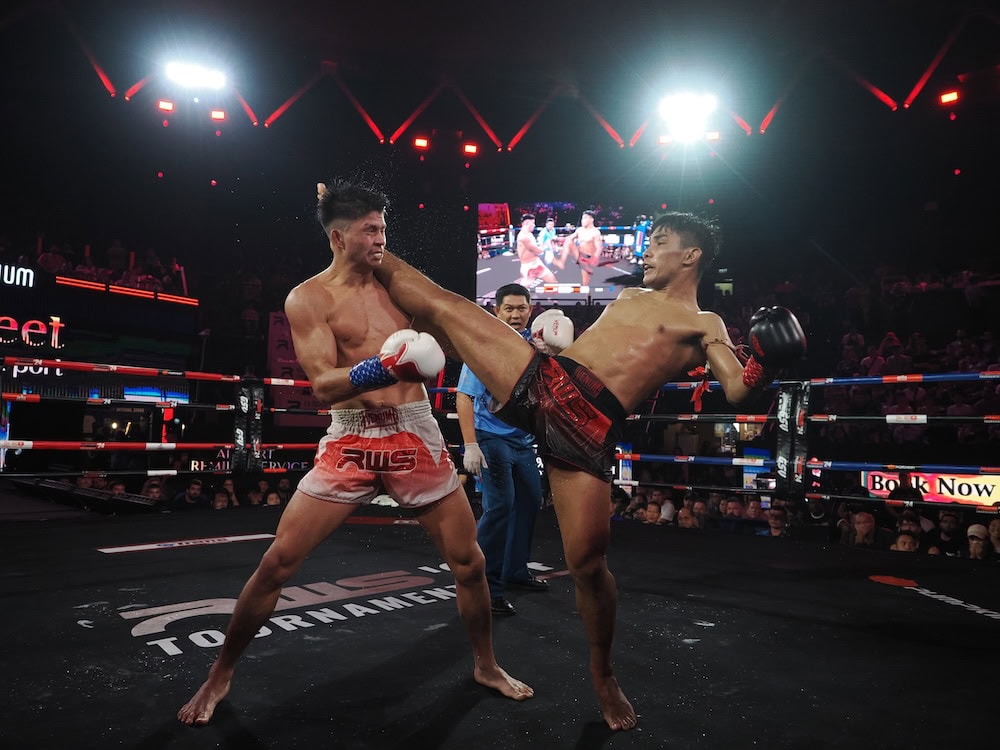
To spot what truly carries over, watch elite Muay Thai fighters in the ring. Rajadamnern Stadium’s ring sits inside a circular, theater-style layout with clear sight-lines from every tier. Every night you’ll hear the live orchestra guide the tempo, and on Saturday fight cards, you’ll see open scoring.
Explore our list of martial arts to round out your skill set or compare all fighting styles to sharpen specific tools. Use Muay Thai fighting styles as your base and add complementary skills with intention. Then, put your notes to the test by watching how the best fighters do it under lights and pressure. Book a night at Rajadamnern Stadium, study the details, and bring new clarity back to your next training session.
References:
- Which Martial Arts Compliment Muay Thai the Best? – Part I. Retrieved on 6 January 2025 from https://joneslymma.com/blog/which-martial-arts-compliment-muay-thai-the-best
- Which Martial Arts Compliment Muay Thai the Best? – Part II. Retrieved on 6 January 2025 from https://joneslymma.com/blog/which-martial-arts-compliment-muay-thai-the-best-part-2
- What Is The Ideal Combination Of Martial Arts? Retrieved on 6 January 2025 from https://medium.com/martial-arts-unleashed/what-is-the-ideal-combination-of-martial-arts-77be3981c9e0
Frequently Asked Questions
Q: What’s the best martial art to pair with Muay Thai first?
A: Boxing. It cleans up hands and pocket defense while keeping your Muay Thai stance and rhythm intact.
Q: If I want better clinch control, should I take up Judo or Wrestling?
Both help. Wrestling builds pressure and pummeling; Judo adds off-balancing and foot sweeps that mirror Muay Thai dumps.
Q: Will cross-training ruin my Muay Thai stance or timing?
Not if you keep contexts separate. Train each art in its stance, then return to Muay Thai specifics before sparring.
Q: Which arts boost my kicking game the most?
Karate and Taekwondo add feints and long-range kicks. Keep Muay Thai mechanics for power and checking.
Q: Is Krabi-Krabong useful if I’m not training with weapons?
A: Yes. Its footwork and timing sharpen entries, exits, and ring cutting.
Q: How do I avoid overtraining when I add another martial art?
Cap hard days to 3 to 4 times a week, keep one light technical day, and run a mini-deload every fourth week.
Q: Where can I study elite striking to guide my cross-training?
Attend a live Muay Thai fight at Rajadamnern Stadium and watch for elbow timing, kick-catch counters, clinch posture, and ring cutting.
Share this news



Related News

Thailand Landmarks: Must-Visit Famous Places
Mar 12, 2026
Discover Thailand’s famous places beyond Bangkok, from ancient temples and stunning mountains to marine parks and incredible islands